Air India’s transformation is no longer a promise or a plan, it is a process already well underway, with visible effects across the passenger journey, operational reliability, and organisational effectiveness. While fleet renewal and network expansion have drawn public attention, a quieter but equally consequential effort has been unfolding behind the scenes: the rebuilding of the airline’s digital foundations.
For years, technology had been a structural weakness. Air India was the last airline in the world operating on a long‑obsolete reservations backbone, and the last company globally running SAP on outdated infrastructure. In the absence of a reliable corporate email system, official business was conducted through more than a thousand uncontrolled personal Gmail accounts, while revenue management relied heavily on manual processes. These constraints led to fragmented information, system outages, and operational friction that affected both customers and employees.
Recognising this, digital modernisation was embedded early into Air India’s broader transformation under the Vihaan.AI programme, not as a follow‑on, but as a prerequisite.
One of the most visible outcomes has been the comprehensive overhaul of Air India’s customer‑facing platforms. The airline rebuilt its digital ecosystem from the ground up, launching a new website and mobile application designed for reliability, clarity, and scale.
Booking flows were simplified, navigation streamlined, and fare options clarified to reduce friction. Enhanced check‑in functionality improved pre‑departure processes, while real‑time updates gave passengers clearer visibility on flight status, boarding times, and gate changes. Crucially, these interfaces were tightly integrated with backend operational systems, materially improving the accuracy and consistency of customer communications.
The results are evident. Air India’s app is now rated 4.8 stars on both iOS and Android, among the highest‑rated airline apps globally, with around 28 million downloads. The website sees 11 million visits per month, nearly four times higher than two years ago, and supports approximately 6.5 million direct ticket bookings monthly. These platforms have earned several global recognitions, including Red Dot and Stevie awards, and the 2025 Adobe Experience Maker of the Year award.
Key Highlights
As stability improved, digital channels evolved from convenience tools into a core service platform.
Air India launched the global airline industry’s first Generative AI virtual assistant, AI.g, in May 2023. Since then, AI.g has handled over 17 million customer queries, with more than 18,000 daily sessions and an industry‑leading containment rate of 97 percent, resolving most queries without human intervention. This has significantly reduced response times while allowing service teams to focus on more complex cases.
Complementing this, Air India’s notification system now generates over one million customer notifications daily, with a delivery rate of 95.5%, strengthening trust through timely and transparent communication.
Together, these changes mark a shift in how customers experience the airline, through consistency, immediacy, and reliability.
Key Highlights –
Behind the passenger interface, Air India has built one of the most extensive data and analytics environments in global aviation. Created largely from scratch, the platform integrates data from over 45 sources, processes more than 800 terabytes of information, and supports over 1,500 KPIs across 300‑plus dashboards used by more than 1,000 business users.
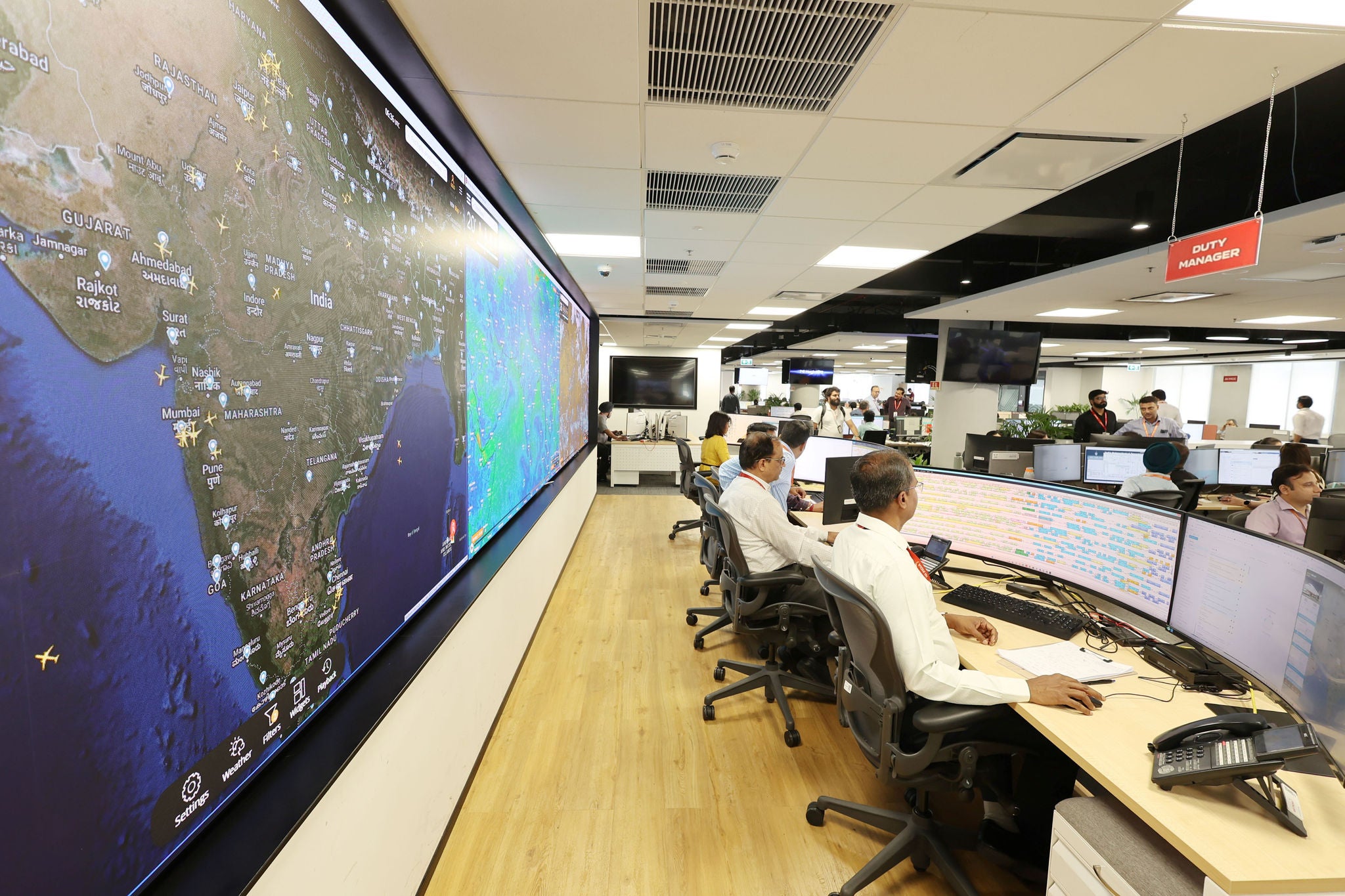
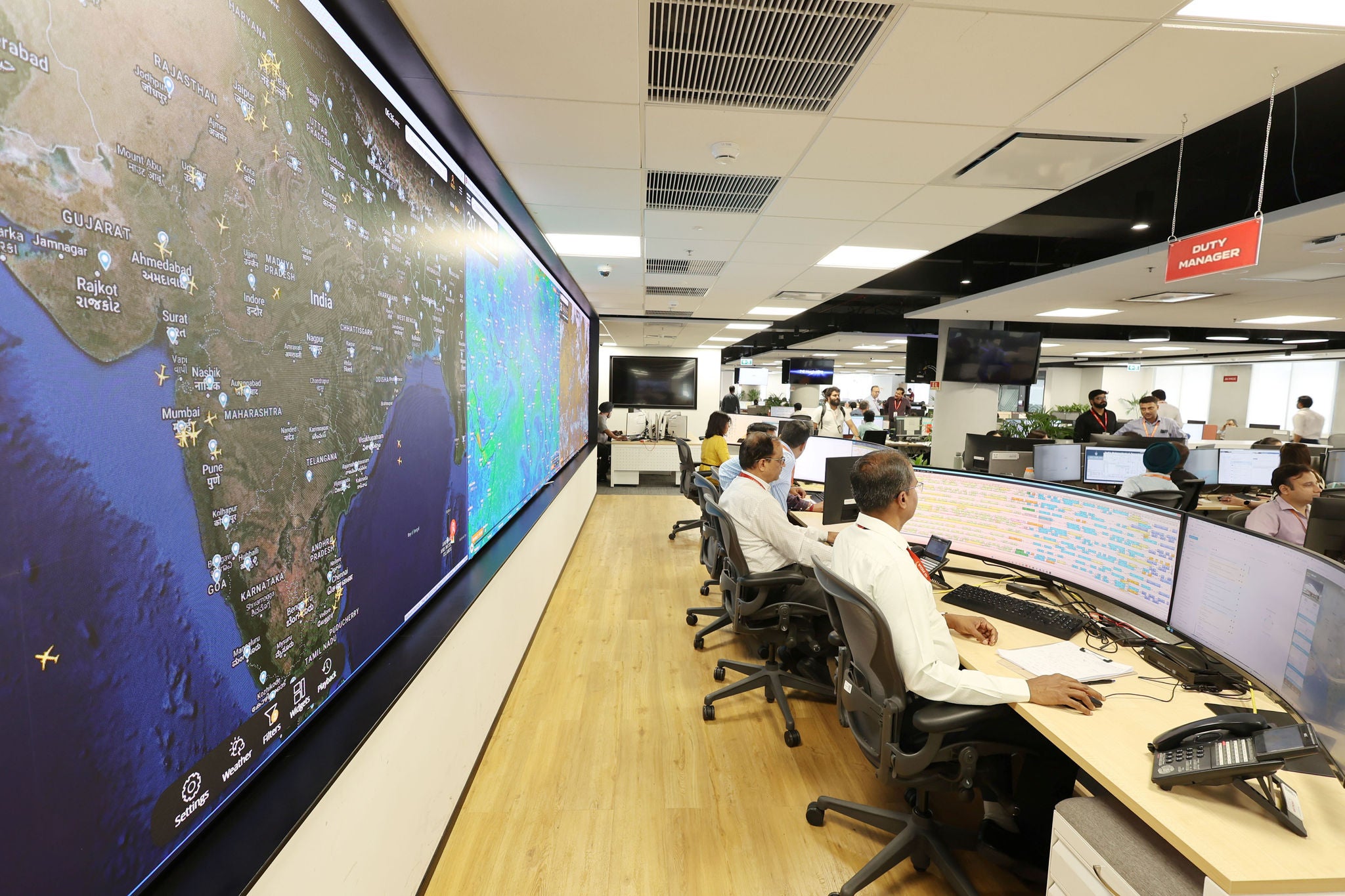
A central Customer Data Platform now houses over 80 million customer profiles, enabling insights to flow across all touchpoints, including inflight through crew iPads. Predictive analytics have strengthened planning, maintenance, and network performance. Engineering benefits from predictive maintenance and improved spare‑parts planning, while upgraded control centres provide real‑time network visibility and faster decision‑making during disruptions.
Collectively, these capabilities mark a shift from reactive management to anticipatory, data‑driven execution.
Key Highlights –
Digital transformation has extended deep into the organisation. Seven persona‑based employee channels replaced paper‑based workflows with fully digitised, mobile‑first experiences. Today, 96% of employees actively use these tools.
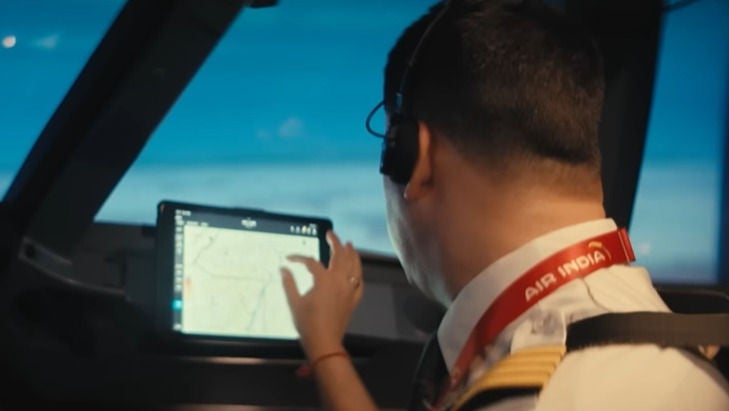
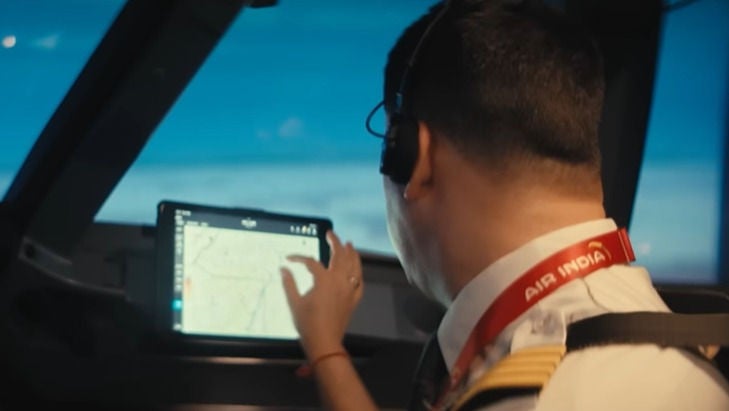
Pilots operate with AI FlightPro as a digital companion, cabin supervisors use CE Plus to manage onboard service in real time, and operations teams rely on AI Smart as a single operational view. A generative‑AI assistant, DG, provides self‑service support for employees. Automation now handles around 180,000 crew requests annually, while internal notification systems deliver more than nine million employee messages each year.
These tools have reduced manual effort, shortened decision cycles, and enabled more consistent execution. Workforce training has scaled in parallel, aligning skills with systems as part of a broader cultural reset.
Key Highlights –
Importantly, Air India’s digital rebuild was designed for long‑term scale rather than short‑term stabilisation.
More than 140 IT and digital systems have been modernised in a $200 million programme spanning every core function, from reservations, departure control, crew and maintenance planning, revenue management, ERP, HR, finance to safety, compliance, loyalty, and disruption management. The entire technology estate is now cloud‑native, following a complete data‑centre migration.
The airline completed one of the fastest S/4HANA ERP implementations in the industry, in just six months, and executed this transformation in roughly two years, compared to an industry average of over a decade for programmes of similar scope. Cybersecurity was treated as foundational, with Air India’s BitSight score improving from 560 at privatisation to 810 today, comparable with leading global financial institutions.
Key Highlights –
These digital capabilities proved critical during the integration of Air India and Vistara. More than 140 systems, 212 aircraft, 90 airports, 9.2 million loyalty members, and over 270,000 reservations were migrated in under a year, far faster than typical airline mergers, without disruption to customers or operations.
Today, Air India is no longer a digital laggard. With over 100 AI initiatives underway and more than 30 agent‑led workflows in progress, technology has shifted from a support function to an operational and strategic core.
Much of this transformation is deliberately understated. It shows up in smoother journeys, clearer information, fewer disruptions, and faster resolution rather than in grand announcements. For Air India, digital transformation is no longer an aspiration, it is an operating reality, reshaping how the airline runs and how it is experienced, one interaction at a time.
Key Highlights